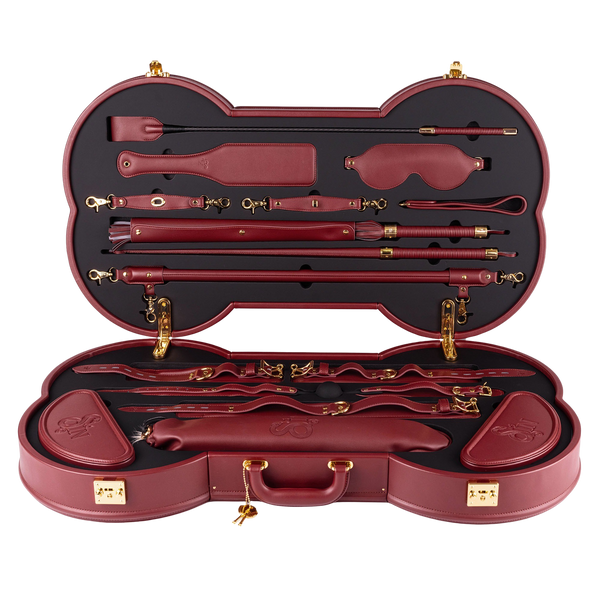
Collaring is the act of giving and accepting a collar to mark a committed D/s relationship. It is a ceremony, not a purchase — the collar is the object, collaring is what happens around it. People often compare it to an engagement or a wedding, and that comparison is close enough to be useful, as long as you remember there is no registry, no officiant and no agreed script.
Why there is no standard version
There is no governing body for this. No two collarings have to look alike, and the community has never settled on a single form. Some are private, between two people, with nothing said out loud. Some are held in front of friends. Some involve written agreements that are read aloud; others involve nothing written at all.
What is consistent is the structure underneath: something is offered, something is accepted, and both people understand that the relationship after is not the relationship before.
The stages people commonly describe
These are conventions, not rules. Plenty of relationships skip stages or invent their own.
- Consideration. An explicit trial period. Often marked with a temporary collar, sometimes just agreed verbally. The point is that it is openly provisional.
- Training or protection. A defined intermediate stage — the dynamic is real but not permanent, and both people know it.
- Formal collaring. The committed stage. This is the one most often marked with a ceremony and a permanent collar.
Some people go straight to the last one. Some stay in the first for years. Neither is wrong.
What tends to be agreed beforehand
The ceremony is the visible part; the conversation before it is the part that matters. Couples who have done this well usually have clear answers to:
- What changes in practice — not in feeling, in behaviour
- What the limits are, and how they get revised
- Who else knows, and how the collar is handled around people who do not
- How the collar is removed, and what removal would mean
- How the arrangement ends, if it ends
That last one is uncomfortable and it is the one most often skipped. A collaring that has no agreed exit is not more committed; it is just less thought through.
Uncollaring
Relationships end, and collared ones end too. Some people hold a formal uncollaring; most simply return or remove the collar. There is no obligation to mark it. What matters is that both people know it has happened, rather than one of them still wearing something the other no longer means.
The collar itself
The object does not have to be expensive or obviously kinky. Many collared people wear a day collar — a piece that reads as ordinary jewellery in public and carries the meaning privately. Others keep a formal collar for private use and wear nothing visible day to day.
What the collar is made of matters far less than what was agreed when it was put on. A chain from a market stall and a commissioned piece can carry exactly the same weight. Buy the object second; have the conversation first.